

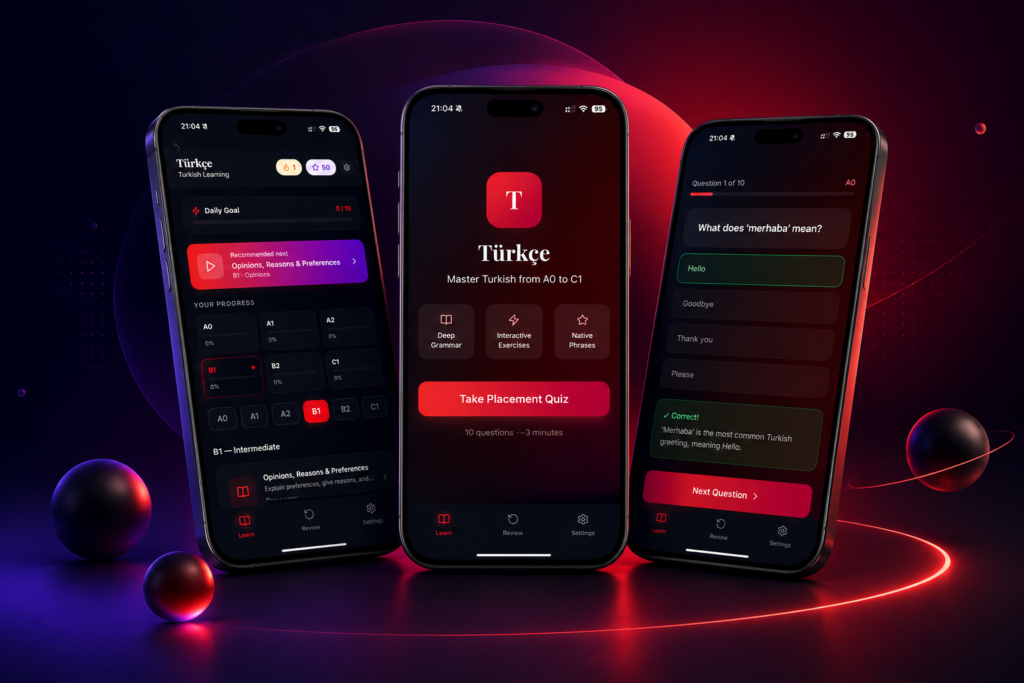
EkLab is a mobile language learning app concept designed to make Turkish learning more structured, more engaging, and easier to scale.
This project was created as a showcase of how we approach mobile app design and product thinking at Anaga Software. Instead of treating an app as a collection of screens, we focused on building a clear learning flow, a scalable content structure, and a mobile experience that feels intuitive from the first interaction.
EkLab demonstrates how a focused product idea can be turned into a strong, buildable app direction.
Project overview
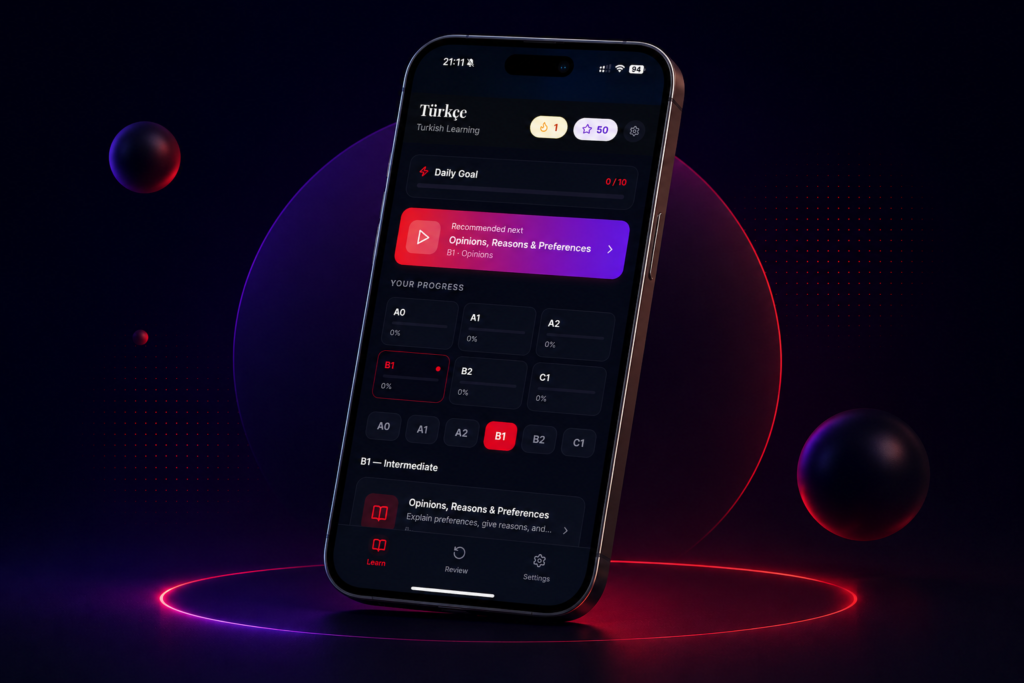
EkLab is built around a simple but powerful idea: language learning works better when the path is clear, progress is visible, and each next step feels manageable.
Many learning products either feel too academic or too gamified without enough structure. With EkLab, the goal was to create a balanced mobile learning experience that combines real educational logic with a modern product interface.
The app concept includes level-based progression, lesson-based learning, interactive exercises, placement logic, and progress-driven motivation. The result is a product direction that is user-friendly on the surface and scalable behind the scenes.
The challenge
Designing a language learning app is not only about making lessons look attractive on mobile. The bigger challenge is creating a system that can support long-term learning without becoming confusing or repetitive.
A strong learning app needs to answer a few key questions well:
- Where should the user start?
- What should they learn next?
- How does progress feel meaningful?
- How can the content scale over time?
EkLab was designed to solve those questions with a structured content model and a clean mobile-first interface.
Our solution
We approached EkLab as a product system, not just a visual concept.
The app direction combines:
- a clear level structure from A0 to C1
- modular lessons built around specific topics
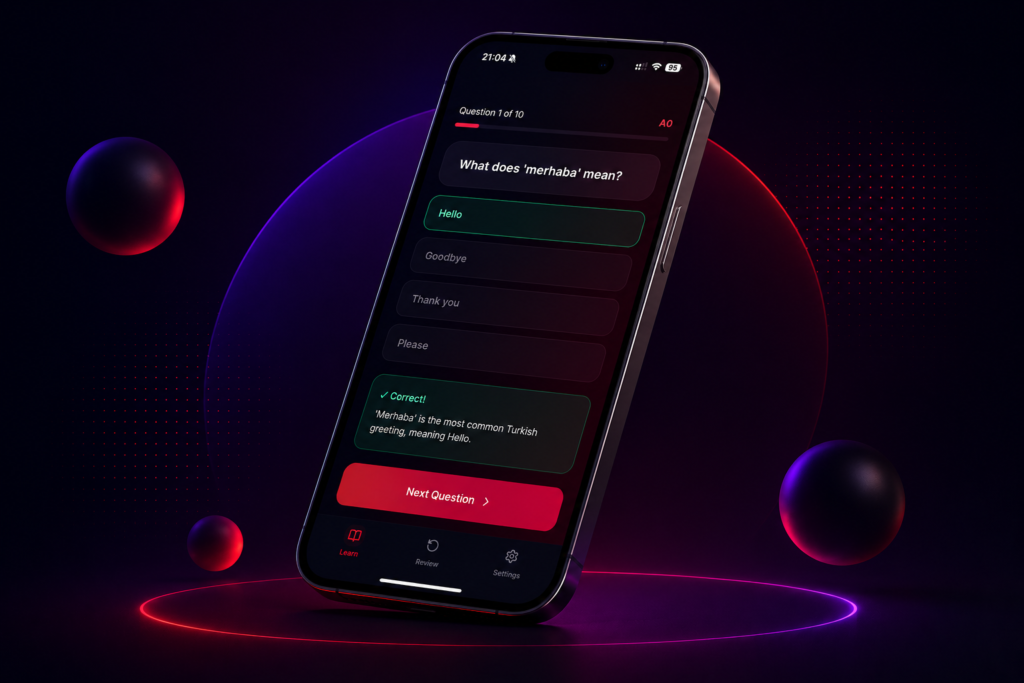
- multiple exercise formats for active recall and reinforcement
- placement logic to guide users to the right starting point
- visible progress systems such as XP, completion states, and learning milestones
- a scalable architecture for future lesson expansion
This makes the product easier to use for learners and easier to develop further for the product owner.
Key product features
Structured learning path
EkLab organizes content into clearly separated levels and lesson groups so learners can move through the language step by step.
Instead of showing a large, unstructured content library, the product guides users through a progression system that feels achievable and focused. This helps reduce friction and improves retention.
Interactive learning experience
The app supports interactive exercise types such as multiple choice, fill-in-the-blank, drag-and-drop, and guided sentence-based practice.
This creates a more active learning experience than passive reading alone and allows the product to combine clarity, repetition, and feedback in a mobile-friendly format.
Smart placement and onboarding
A placement flow helps new users begin at the right level instead of repeating content they already know.
This is especially important for educational apps, where the first session often determines whether the user continues or drops off. EkLab was designed to make that first experience feel quick, clear, and useful.
Progress and motivation
EkLab uses visual progress tracking, level completion, and reward-style learning feedback to make the experience feel motivating without becoming childish.
The product direction focuses on meaningful progress, not noisy gamification. The goal is to support consistency, confidence, and long-term engagement.
UX and design direction
The visual direction for EkLab combines a dark premium interface with strong contrast, clean spacing, and high focus on readability.
The design system was shaped around mobile product principles:
- clear hierarchy
- short interaction paths
- strong call-to-action visibility
- consistent layout patterns
- reusable UI structure across multiple screens
This creates a modern app experience that feels polished while still leaving room for scale and product growth.
Product thinking behind the project
One of the most important parts of this project is what sits behind the interface.
EkLab was planned with product logic in mind, including:
- lesson architecture
- reusable exercise components
- progression rules
- content expansion logic
- onboarding and placement structure
- future-ready feature planning
That makes this project a strong example of how we think about custom app development: not just what the product looks like, but how it works, grows, and stays maintainable.
Why this matters for clients
EkLab is more than a language learning app concept. It is also a practical example of our approach to mobile app development.
For clients, this project shows that we can help with:
- mobile app concept development
- UX structure and user flow planning
- feature definition
- scalable content-based products
- modern interface design
- development-ready product thinking
The same process can be applied to many other product types, including educational apps, internal business tools, booking apps, membership platforms, and custom service apps.
Final result
EkLab is a strong example of a modern mobile app concept built around clarity, progression, and scalable product structure.
It shows how a focused idea can become a polished app case study and how we approach custom digital product work at Anaga Software: with practical strategy, clean UX, and systems designed for growth.